
You are here
 Acarosporaceae (1)
- Arthoniaceae (1)
- Arthoniomycetes (1)
- Caliciaceae (2)
- Cladoniaceae (1)
- Coccocarpiaceae (1)
 Coenogoniaceae (1)
- Crocyniaceae (1)
- Dictyonema (2)
- Ectolechiaceae (3)
- Eremithallus (1)
- Eurotiomycetes (2)
- Gomphillaceae (4)
- Graphidaceae (8)
- Icmadophilaceae (1)
- Lecanoraceae (3)
- Lecanoromycetes (9)
- Lecideaceae (1)
- Lichinales (1)
- Lobariaceae (2)
- Megalosporaceae (1)
- Megasporaceae (1)
- Ochrolechiaceae (1)
- Pannariaceae (1)
- Parmeliaceae (8)
- Pertusariaceae (1)
- Phlyctidaceae (1)
- Pilocarpaceae (2)
- Porinaceae (1)
- Pyrenulaceae (1)
- Ramalinaceae (4)
- Rhizocarpaceae (1)
- Roccellaceae (3)
- Sphaerophoraceae (1)
- Stereocaulaceae (1)
- Teloschistaceae (2)
- Thelotremataceae (3)
- Trapeliaceae (1)
- Verrucariaceae (1)

Coenogonium flammeum L. I. Ferraro, Michlig & Lücking
Nomenclature
-
Family: CoenogoniaceaeGenus: Coenogonium


SUMMARY
Mycobank MB 517758
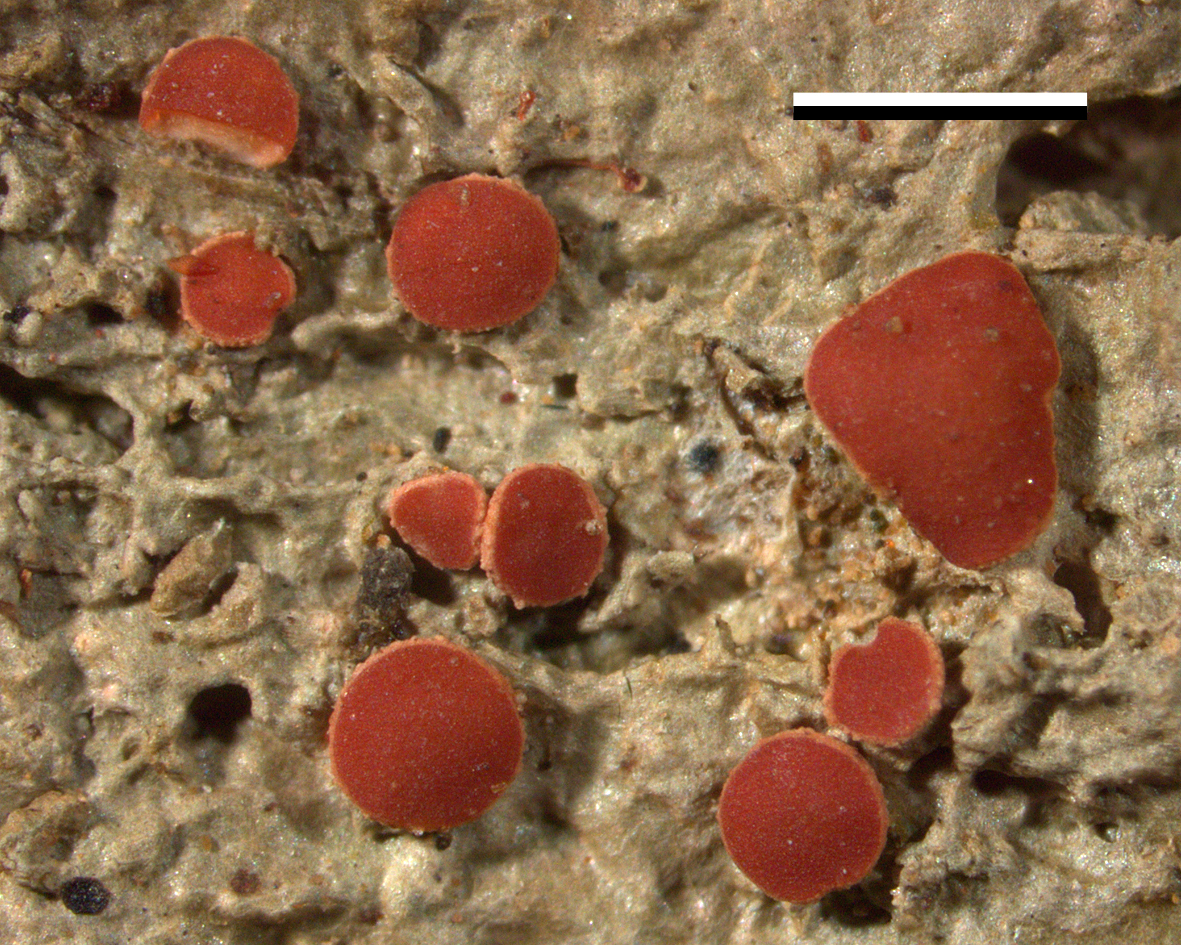
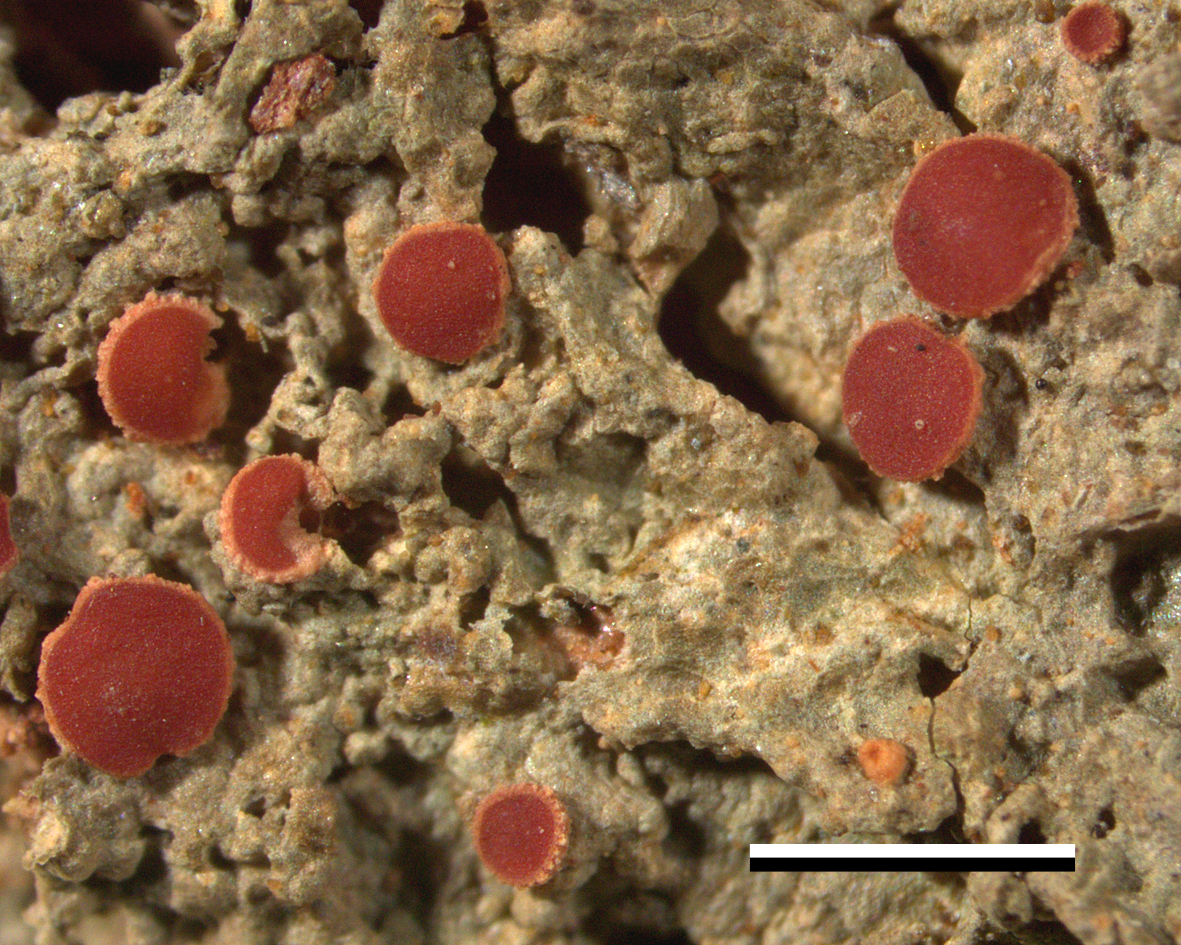
Thallus crustose, corticolous, continuous, thin, smooth, pale olive-grey, 2–5 cm diam., with cartilaginous corticiform layer, shiny; white prothallus present. Photobiont Trentepohlia, cells angular-rounded, in irregular plates or short threads, 6–10 µm diam. Apothecia sessile, rounded, 0.6–1.2 mm diam. and 150–200 µm high; disc at first plane but becoming slightly convex, deep orange-brown to red-brown; margin thin, not prominent, minutely denticulate (especially when young), creme-colored. Excipulum paraplectenchymatous with radiating cell rows in outer parts, 70–150 µm broad, colourless to pale orange peripherally, I+ sordid yellow-brown; outermost cells elongated and thin-walled. Hypothecium 15–25 µm high, colourless to pale yellowish. Hymenium 90–100 µm high, colourless, I+ (pale) blue then quickly sordid green, then reddish brown. Asci 70–80 × 5–6 µm. Ascospores uniseriate, ellipsoid, 1-septate, 8–11 × 2.5–3.5 µm, 3–3.5 times as long as broad. Pycnidia not observed. Chemistry: no substances detected by TLC.